mentor blog
experiential-learning-–-the-true-teacher
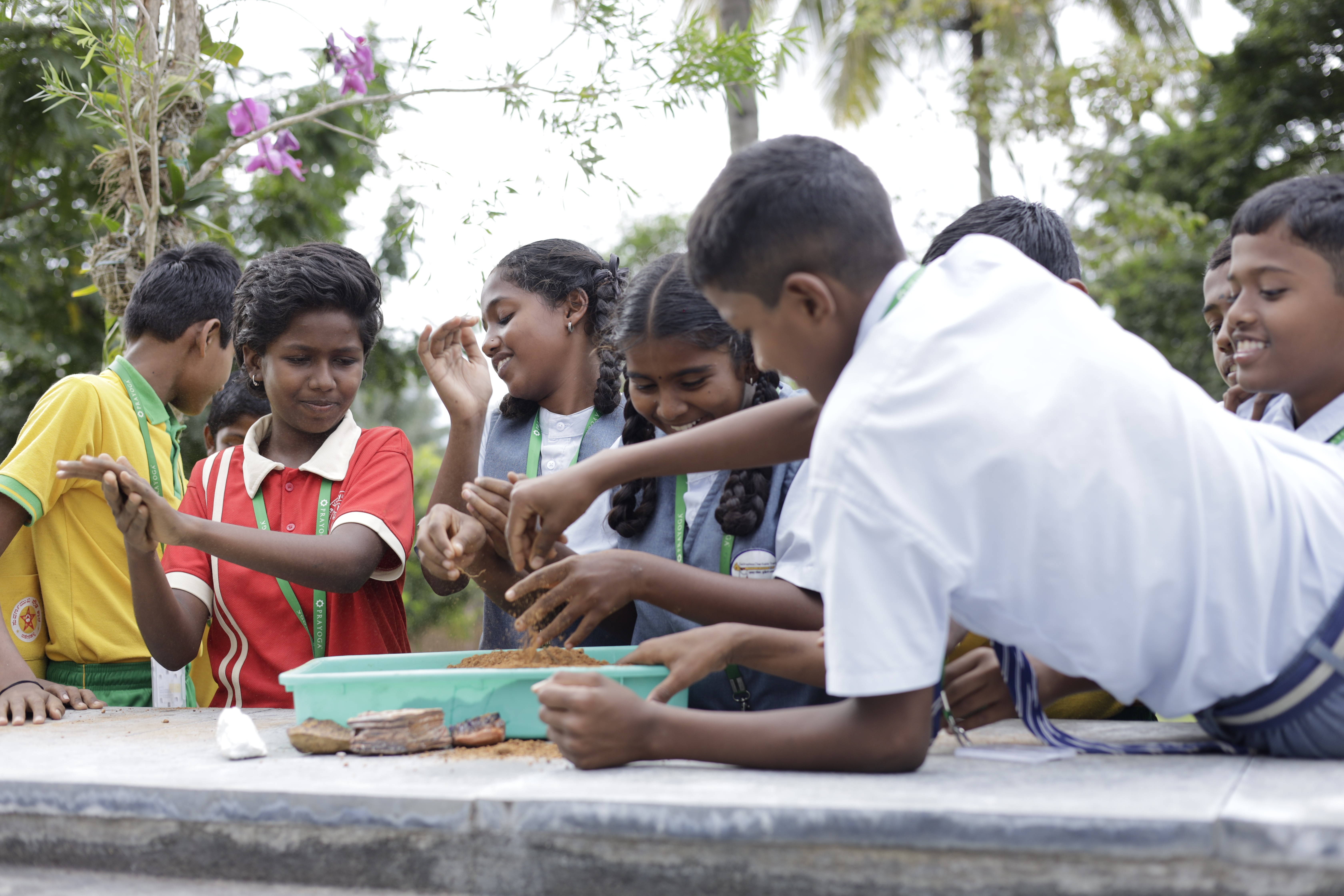
"The only source of knowledge is experience. Everything else is just information." - Albert Einstein. Shyam was someone who was branded as a highly mischievous student who always asked unnecessary questions. He wasn’t liked by any of his classmates due to this preconceived notion. He used to ask his teachers too many questions. Due to this, the teachers felt disrupted and couldn’t cover the intended lessons for the students. Some teachers also felt like he was asking questions that seemed completely irrelevant in terms of scoring good grades in exams. Whenever a teacher mentioned a fact, he would ask for an experiment or a practical demonstration before accepting it as true. He was told that water boils at 100 degrees Celsius at sea level. He wondered as to what kind of water boils at 100 degrees Celsius at sea level – will both water from a tap and from the sea boil at the same temperature? Will water boil at 100 degrees Celsius even in a pressure cooker? These were the kind of questions he would ask. Do you think Shyam was right as a student, or was he a nuisance as others perceived? While inquiry-based learning explores the power of asking meaningful questions, experiential learning takes the next natural step: learning through meaningful experiences. While inquiry-based learning begins with curiosity, experiential learning deepens that curiosity through action. It moves students beyond asking questions about the world to engage directly with it, allowing understanding to emerge through participation rather than passive reception. Experiential learning is commonly associated with educational theorist David A. Kolb, who described learning as a continuous cycle involving experience, reflection, conceptualization, and further experimentation. According to Kolb’s model, learners first encounter a concrete experience, then reflect on what occurred, develop broader insights or theories from that reflection, and finally apply those insights in new situations. This cyclical process highlights that experience alone is not enough; it is the thoughtful examination of experience that transforms activity into purposeful learning. Where inquiry-based learning encourages students to ask “why?” and “how?”, Experiential learning invites them to test those questions in authentic contexts. A classroom investigating environmental sustainability, for example, might begin by researching climate patterns and discussing possible solutions. Experiential learning would extend this inquiry into designing a recycling initiative, conducting energy audits, or collaborating with community organizations. Through direct involvement, students encounter real challenges, adapt their thinking, and gain insights that no textbook in isolation could provide. Till students reach the age of 13-14 years, learning and cognitive development happens through concrete experiences and sensory inputs from the environment. This is why experiential learning is seen as the best way to move forward, particularly with early education. Educational philosopher John Dewey emphasized that education should be rooted in lived experience, arguing that students learn best when they see the connection between classroom learning and everyday life. This learning model embodies this principle by ensuring that education feels relevant and purposeful, providing joy for learning and a sense of discovery, rather than abstract and disconnected. This can be seen in Prayoga’s flagship programs – Kriya and Anveshana. Kriya uses a guided inquiry-based model to understand the impact of experiential learning of science on the development of competencies in school students in India. The grassroots of the Kriya program began with the philosophy that experiential learning does not require elaborate field trips or complex simulations, instead using simple materials available in everyday households to practically demonstrate scientific concepts. Kriya reaches almost 12,000 students in mostly government schools across Karnataka, aiming to have science education in every classroom. Anveshana is an open inquiry model that seeks to understand how science research impact learning outcomes through exploring beyond the curriculum, with an emphasis on student engagement with science. Student researchers are given real world problems to work on and find solutions by working on actual experiments under the guidance of senior researchers. The works produced have been published in peer review international journals. Inquiry-based learning and experiential learning work most powerfully when combined. Inquiry sparks curiosity and frames the problem, while experience provides the testing ground where ideas are challenged and refined. Together, they cultivate learners who are not only inquisitive but also capable of translating thought into action. In an era that demands adaptability and innovation, embedding experience within inquiry may be one of the most meaningful ways to prepare students for a complex and evolving world.
Similar Causes
Building Lifes Together
From education to relief, every cause carries our mission to uplift and empower.