The Universal Spiral: From DNA to Galaxies
The Universal Spiral: From DNA to Galaxies
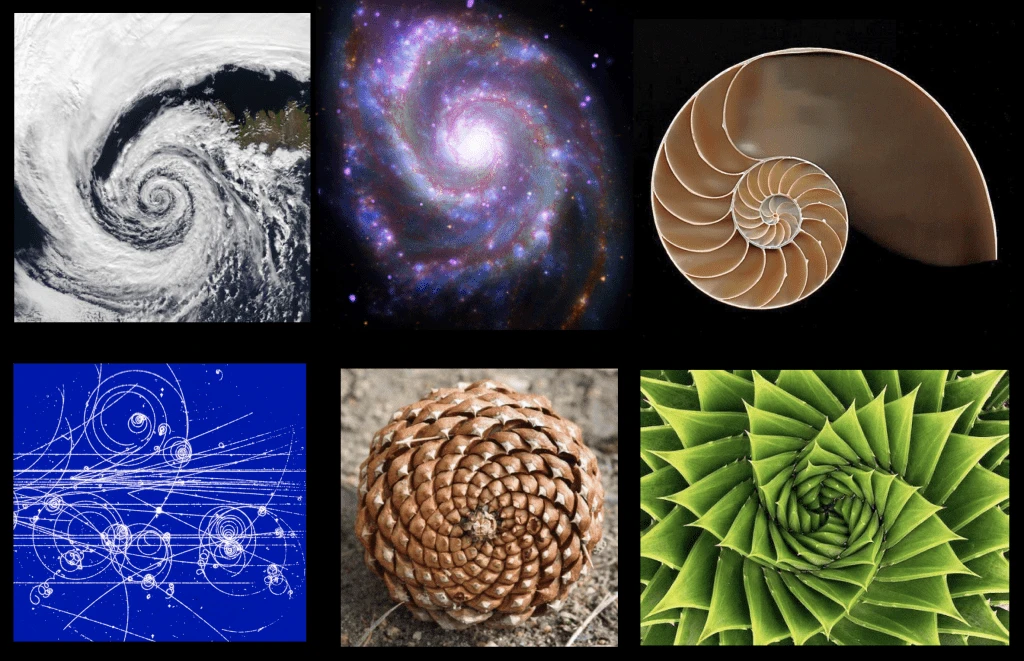
When we look closely at nature, there is one pattern that appears with remarkable persistence - the spiral. From vast galaxies to swirling hurricanes, from the arrangement of sunflower seeds to the structure of DNA, spirals appear across all sizes ranging from nanometres to a few billion light years away. They seem to connect to the cosmos itself, as the same geometrical structure appears in all places.
The Fibonacci sequence's earliest known reference appears in the work of Pingala, an Indian scholar around 200 BCE, in his treatise Chandaḥśāstra on Sanskrit prosody. Pingala analysed patterns of syllables in poetic meters, using a form of binary enumeration to count possible combinations. His cryptic formula, misau cha, effectively described the recursive pattern that later became known as the Fibonacci sequence.
This begs the question - is the spiral a mere mathematical coincidence or does it reveal something fundamental about how nature organizes itself?
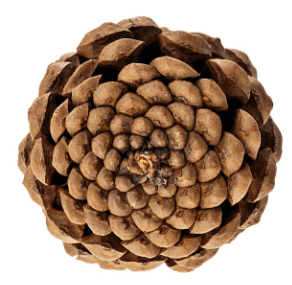
In astronomy, spiral galaxies contain hundreds of billions of stars arranged in sweeping arms rotating around a central core. Closer to Earth, hurricanes and cyclones form giant atmospheric spirals. Ocean currents, whirlpools, tornadoes, and even the growth of seashells follow similar geometries. In the biological world, sunflower heads, pinecones, cactus spines, and many flowers arrange themselves according to spiral patterns that correspond to Fibonacci sequences. The horns of animals, the coils of tendrils, and the shape of certain proteins all exhibit the same organisation.
And then there is the DNA. The famous double helix is, in essence, a spiral - two intertwined helices winding around a common axis. While a helix is mathematically distinct from a flat spiral, both belong to a family of forms generated through rotation combined with growth or movement through space.
The deeper question is why these patterns appear so often. Scientists generally view spirals not as predetermined designs but as natural outcomes of physical laws. Whenever matter, energy, or information moves while simultaneously rotating, spiral structures tend to emerge. A spiral can efficiently distribute forces, transport energy, pack material, or facilitate growth.
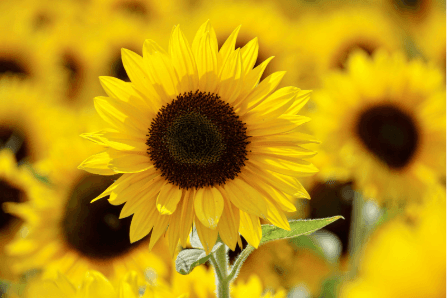
Consider a sunflower. New seeds form at the centre while older seeds move outward, creating intersecting spirals that maximise packing efficiency and minimise wasted space. This arrangement also ensures each new growth point is positioned farthest from the previous one, preventing overlap and maximising exposure to sunlight. No seed "knows" where to go; the pattern emerges from simple growth rules. Similarly, galaxies develop spiral arms because of gravitational interactions and density waves moving through rotating star systems. The spiral is not imposed from outside — it emerges from the dynamics of the system itself.
DNA raises an especially fascinating question. Could life have stored genetic information in some other form? Biologists believe the double helix emerged because it offered extraordinary advantages — stability, reliable copying during cell division, and the compact storage of enormous amounts of information while maintaining accessibility for biological processes. Crucially, DNA's shape results from the physical properties of its molecular components. The chemical bonds, molecular charges, and interactions with water naturally favour a helical arrangement. The double helix is not just useful — it is energetically favourable.
This leads to a deeper philosophical question: are spirals products of evolution, or consequences of universal laws — and are those universal laws themselves part of evolution? The answer may be both. The mathematical possibility of spirals has always existed. Wherever rotation, growth, and flow occur, spiral forms can emerge — built into the geometry of physical reality itself. Yet biological systems have evolved to utilise these patterns. Plants that arranged leaves more efficiently gained better access to sunlight. Molecular structures that stored information more reliably were more likely to persist. Over time, evolution favoured organisms that utilised geometries already supported by physics.
As long as matter rotates, fluids flow, organisms grow, and energy disperses, spirals will continue to emerge. Human beings often think of experimentation as a deliberate activity conducted in laboratories. Nature operates differently — across billions of years, countless environments, and unimaginable scales, natural processes continuously explore possibilities. Patterns that are stable, efficient, and resilient tend to persist. The spiral appears to be one of those enduring solutions.
The Universal Spiral: From DNA to Galaxies
When we look closely at nature, there is one pattern that appears with remarkable persistence - the spiral. From vast galaxies to swirling hurricanes, from the arrangement of sunflower seeds to the structure of DNA, spirals appear across all sizes ranging from nanometres to a few billion light years away. They seem to connect to the cosmos itself, as the same geometrical structure appears in all places.
The Fibonacci sequence's earliest known reference appears in the work of Pingala, an Indian scholar around 200 BCE, in his treatise Chandaḥśāstra on Sanskrit prosody. Pingala analysed patterns of syllables in poetic meters, using a form of binary enumeration to count possible combinations. His cryptic formula, misau cha, effectively described the recursive pattern that later became known as the Fibonacci sequence.
This begs the question - is the spiral a mere mathematical coincidence or does it reveal something fundamental about how nature organizes itself?
In astronomy, spiral galaxies contain hundreds of billions of stars arranged in sweeping arms rotating around a central core. Closer to Earth, hurricanes and cyclones form giant atmospheric spirals. Ocean currents, whirlpools, tornadoes, and even the growth of seashells follow similar geometries. In the biological world, sunflower heads, pinecones, cactus spines, and many flowers arrange themselves according to spiral patterns that correspond to Fibonacci sequences. The horns of animals, the coils of tendrils, and the shape of certain proteins all exhibit the same organisation.
And then there is the DNA. The famous double helix is, in essence, a spiral - two intertwined helices winding around a common axis. While a helix is mathematically distinct from a flat spiral, both belong to a family of forms generated through rotation combined with growth or movement through space.
The deeper question is why these patterns appear so often. Scientists generally view spirals not as predetermined designs but as natural outcomes of physical laws. Whenever matter, energy, or information moves while simultaneously rotating, spiral structures tend to emerge. A spiral can efficiently distribute forces, transport energy, pack material, or facilitate growth.
Consider a sunflower. New seeds form at the centre while older seeds move outward, creating intersecting spirals that maximise packing efficiency and minimise wasted space. This arrangement also ensures each new growth point is positioned farthest from the previous one, preventing overlap and maximising exposure to sunlight. No seed "knows" where to go; the pattern emerges from simple growth rules. Similarly, galaxies develop spiral arms because of gravitational interactions and density waves moving through rotating star systems. The spiral is not imposed from outside — it emerges from the dynamics of the system itself.
DNA raises an especially fascinating question. Could life have stored genetic information in some other form? Biologists believe the double helix emerged because it offered extraordinary advantages — stability, reliable copying during cell division, and the compact storage of enormous amounts of information while maintaining accessibility for biological processes. Crucially, DNA's shape results from the physical properties of its molecular components. The chemical bonds, molecular charges, and interactions with water naturally favour a helical arrangement. The double helix is not just useful — it is energetically favourable.
This leads to a deeper philosophical question: are spirals products of evolution, or consequences of universal laws — and are those universal laws themselves part of evolution? The answer may be both. The mathematical possibility of spirals has always existed. Wherever rotation, growth, and flow occur, spiral forms can emerge — built into the geometry of physical reality itself. Yet biological systems have evolved to utilise these patterns. Plants that arranged leaves more efficiently gained better access to sunlight. Molecular structures that stored information more reliably were more likely to persist. Over time, evolution favoured organisms that utilised geometries already supported by physics.
As long as matter rotates, fluids flow, organisms grow, and energy disperses, spirals will continue to emerge. Human beings often think of experimentation as a deliberate activity conducted in laboratories. Nature operates differently — across billions of years, countless environments, and unimaginable scales, natural processes continuously explore possibilities. Patterns that are stable, efficient, and resilient tend to persist. The spiral appears to be one of those enduring solutions.