Math Problem Solving Day - A Day of Curiosity, Collaboration, and Joy
Math Problem Solving Day - A Day of Curiosity, Collaboration, and Joy
- Aishwarya Katti, Faculty - Mathematics
During my undergraduate and postgraduate studies, I was actively involved in the mathematics association, where I first discovered the excitement of aptitude, puzzles, and problem-solving. Participating in inter-college mathematics events was always a thrilling experience. Working together with friends to tackle challenging problems not only sharpened my thinking but also made learning mathematics enjoyable.
After joining Prayoga, however, my exposure to problem-solving deepened significantly. I encountered a wide range of strategies and approaches that transformed the way I think about mathematics. Over time, I learned to view problems from multiple perspectives, look for hidden patterns, and appreciate that there is often more than one path to a solution.
Then came a day which tested my acumen as a math faculty and this is how I ``solved’’ it.
On 20 May 2026, the AET Mathematics team organised a ‘Math Problem Solving Day’ for our Anveshana students. The event was designed to move students beyond routine classroom procedures and immerse them in the joy of thinking, discussing, and solving problems together. The day was divided into two parts. During the morning session, students worked collaboratively on a carefully curated set of mathematical problems. In the afternoon, they presented their solutions and shared the reasoning behind their approaches.
We began with one of the problems from the problem set.
On the big balance below, we put two identical balances and weights in their pans. The six weights weigh 1, 2, 3, 4, 5, and 6 grams. Can you figure out which weight was placed in which pan?
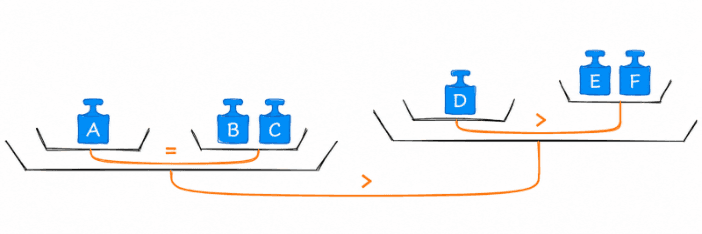
Take a moment to think about it and give it a try.
Watching students enthusiastically engage with problems like this reminded me of my own journey with mathematical problem-solving.
Reflecting on these experiences, I often wish I had encountered such opportunities during my school years, to sit with friends, discuss ideas, wrestle with challenging problems, and experience the joy of mathematical discovery together. Problem-solving offers a unique mental workout for students. It nurtures logical reasoning, creativity, perseverance, and collaboration in ways that routine classroom exercises often cannot.
‘Math Problem Solving Day’ was created with exactly this spirit in mind.
The Problem Set
The problem set drew from a variety of mathematical domains, including algebra, geometry, number theory, and combinatorics. The questions were deliberately chosen so that students could engage with them using basic mathematical ideas, number sense, logical reasoning, pattern recognition, and trial-and-error strategies rather than advanced topics.
Collaboration and Eureka Moments
To encourage collaboration, students were divided into six groups comprising learners from Grades 8 to 11. This mix of age groups created a rich learning environment where ideas flowed freely and students learned from one another's perspectives. Whenever a team encountered a roadblock, other students stepped in with suggestions and encouragement, helping them explore alternative approaches.
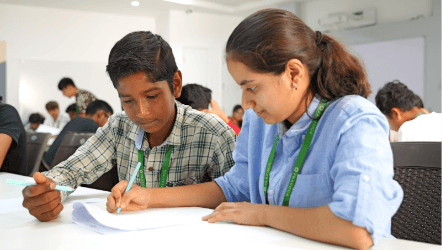
Figure 1: Students discussing strategies and collaborating to solve problems
One of the most rewarding aspects of the day was witnessing the energy and enthusiasm in the room. Whenever a group believed they had solved a problem, they would eagerly rush to us for a quick check. If their solution turned out to be incorrect, they simply returned to their tables to try again. Their persistence captured the true spirit of problem-solving.
The afternoon presentation session was equally inspiring. Students confidently came forward to explain their methods and reasoning.
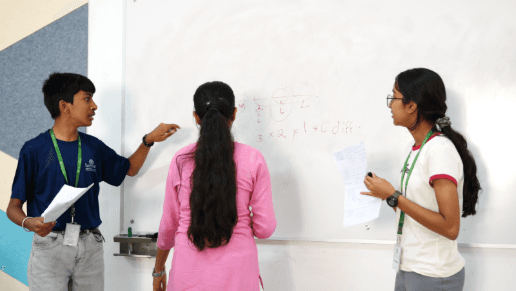
Figure 2: Students presenting their solutions and explaining their reasoning
It was fascinating to observe multiple valid approaches to the same problem, and students greatly appreciated the diversity of thinking demonstrated by their peers.
One such problem was:
Find all the ways of placing the integers 1, 2, 3, …, 16 in the boxes below, such that each integer appears in exactly one box, and the sum of every pair of neighbouring integers is a perfect square.

The Intuitive Approach:
One group relied primarily on trial and error. Recognising that 16 is the largest number, they began with it and gradually built the arrangement by logically placing the remaining numbers.
The Systematic Approach:
Another group adopted a graph theory approach. They listed all the numbers and mapped every valid perfect-square connection. Through this analysis, they discovered that 16 and 8 each had only one possible neighbour, meaning they had to occupy the two ends of the arrangement. Using this network of connections, they systematically traced the complete solution.
Now, let us revisit the weight problem.
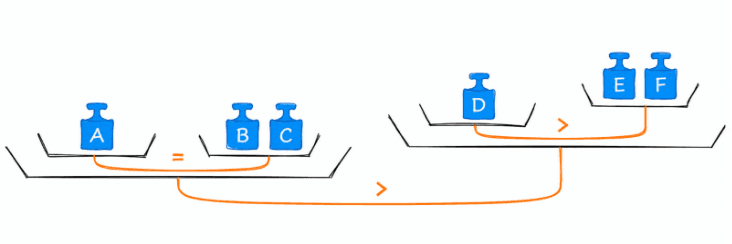
From the diagram, the following conditions must be satisfied:
A=B+C
D>E+F
A+B+C>D+E+F
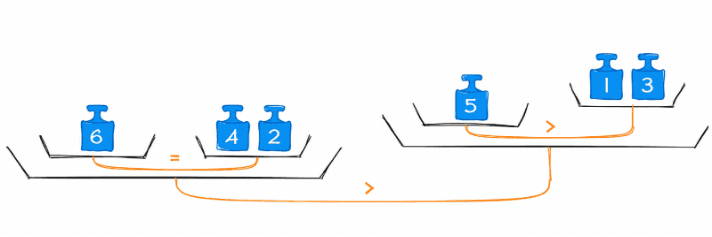
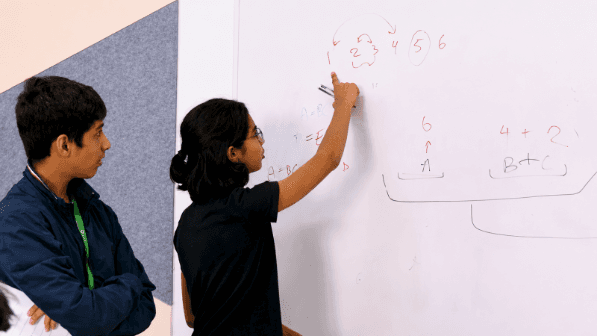
Figure 3: Solution to the weight problem from students
Reflections and Takeaways
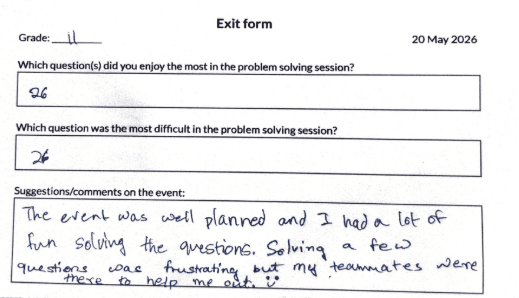
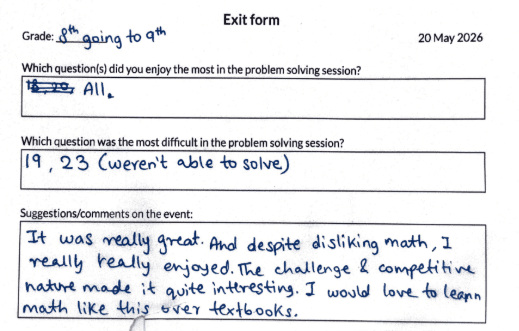
Figure 4: Feedback from students
The feedback from students was overwhelmingly positive. They described the session as interesting, enjoyable, challenging, and rewarding. Many felt that the experience strengthened their logical thinking, problem-solving abilities, and confidence in communicating mathematical ideas. Several students highlighted the importance of teamwork and peer discussions in helping them tackle some of the most challenging problems.
After a month and a half of intensive Anveshana work, the event provided a refreshing change of pace. It was more than just a mathematics activity; it was an opportunity to relax, interact with peers, and rediscover the joy of learning together.
For both the students and the organisers, Math Problem Solving Day was a memorable experience. More importantly, it served as a reminder that mathematics is not merely about finding answers; it is about exploring ideas, learning from mistakes, and building understanding together. When students are given the freedom to think independently, collaborate with others, and enjoy the process of discovery, mathematics becomes not only meaningful but truly joyful.

Similar Blogs
News, Voices & Impact
Explore updates, field notes, and stories that showcase our mission and impact.